How We Use "Black Box" (ECM) Data to Win Truck Accident Cases
The Digital Evidence That Doesn't Lie, Doesn't Forget, and Doesn't Wait for You
By Attorney Juan C. Burgos | Serving Orange, Osceola, Seminole & Polk Counties
The short version: In a standard car accident, liability often comes down to witness testimony and skid marks. In a commercial truck accident, there's a third witness — one that never lies and never forgets: the Electronic Control Module (ECM), commonly called the "black box." It records speed, braking, and engine data in the moments before a crash. The catch: that data is perishable, and trucking companies aren't required to hold onto most of it for long. Speed matters as much as strategy.
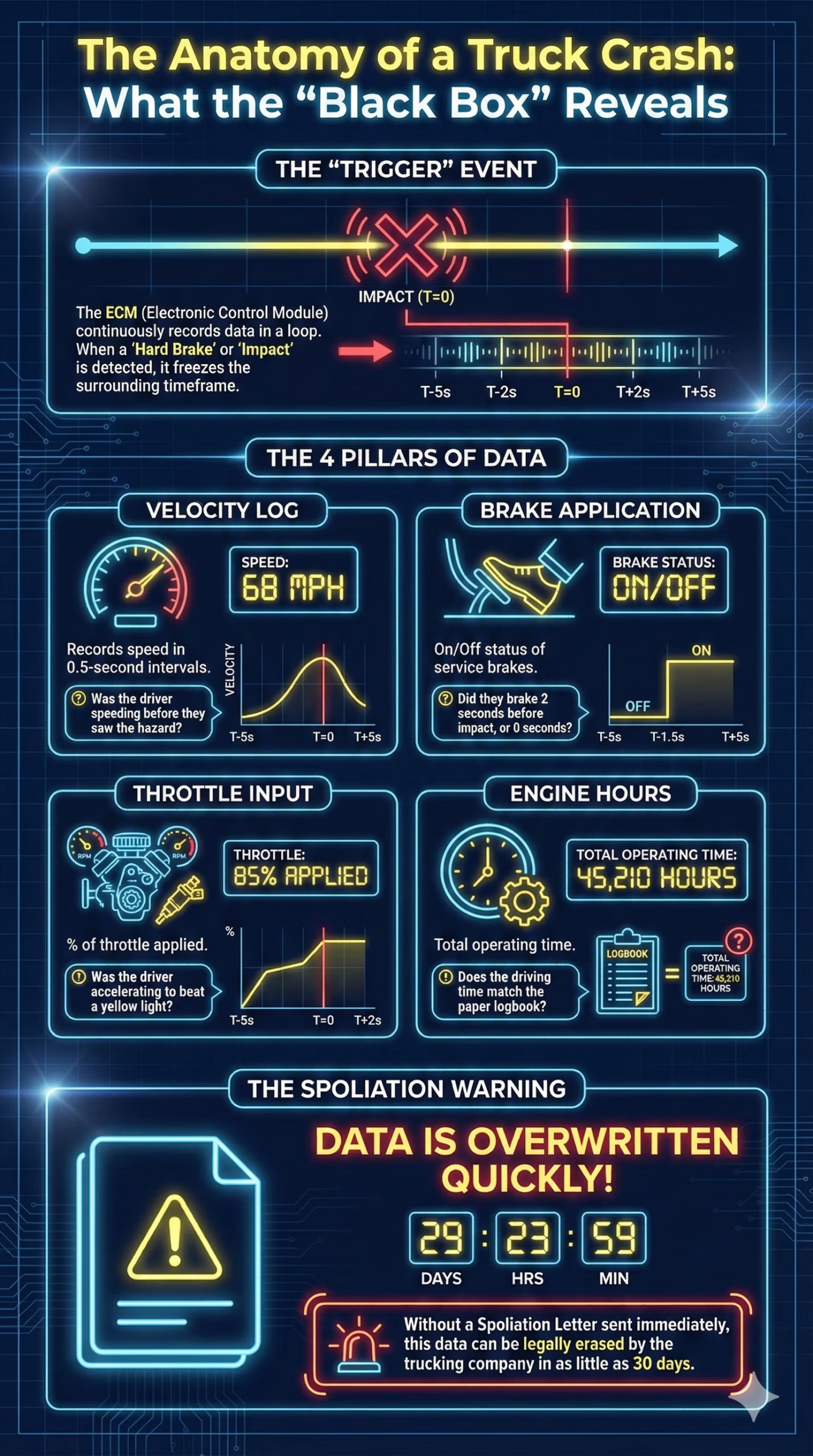
Commonly known as the "black box," the ECM is the brain of a modern heavy-duty truck. It doesn't just control the engine — it records a forensic timeline of the vehicle's actions in the seconds leading up to a crash. At Juan Burgos Law, we don't just handle truck accidents; we build the case around this data, extracting and analyzing it to take apart the trucking company's defense before they've finished building it.
Here's the technical breakdown of how we use ECM data to prove negligence when the driver won't admit it.
1. The "Sudden Deceleration" Event
Most ECMs are triggered to "hard save" data when they detect a sudden deceleration event — usually a rapid drop in speed, like slamming on the brakes or an impact. Once triggered, the system freezes a window of data around the event. The exact window varies by manufacturer and system (Bendix, Detroit Diesel, and Cummins all record slightly differently), but many capture roughly 60 seconds before the trigger and 15 seconds after it.
What we look for: if the truck driver claims, "the car cut me off and I braked immediately," the ECM tells the truth. We compare the Brake Switch Status against the Vehicle Speed timestamps. If the data shows the brakes were applied only after the impact, that tells us the driver was distracted and never actually reacted to the hazard.
2. Speed Governor Audits
Commercial trucks often run with speed governors set by the fleet manager, typically capped around 65 to 70 mph. Drivers and unscrupulous companies sometimes tamper with these settings or ignore over-speed alerts anyway.
The litigation edge: we analyze the Engine RPM and Vehicle Speed logs. If a truck was traveling at 75 mph in a 55 mph zone on US 441 in Lockhart, the ECM records that violation with pinpoint accuracy. That can establish negligence per se — a violation of a safety statute that shifts the practical burden of proof heavily in your favor under Florida law.
3. The Spoliation Race Against Time
This is the most critical factor in truck litigation: the data is perishable, and the clock starts the moment the crash happens.
Federal law doesn't require carriers to preserve raw ECM data indefinitely. Depending on the system, a truck's black box can begin overwriting its own data within minutes of continued driving, or once its trip buffer fills. Even a driver's electronic logging device (ELD) records — a separate but related data source under 49 CFR § 395.15 — only have to be retained for six months. After that, a carrier has no federal obligation to keep them at all.
The Legal Solution: The Spoliation Letter
Immediately after you hire us, we send a formal letter of spoliation, by certified mail, to the trucking company. It puts them on formal legal notice that a claim is pending and explicitly forbids repairing, driving, or altering the truck until we've downloaded the data. Once a carrier receives that notice, it has a legal duty to preserve the evidence. If they destroy it anyway, a judge can instruct the jury to assume the missing evidence would have worked against them.
4. Hours of Service (HOS) Verification
The Federal Motor Carrier Safety Administration (FMCSA) strictly limits how many hours a driver can operate without a break. Since December 2017, most commercial drivers required to keep hours-of-service records have to use an electronic logging device rather than a paper logbook — though narrow exceptions still exist for short-haul drivers, older pre-2000 vehicles, and drivers using paper logs for 8 days or less in a 30-day period.
Even with an ELD in place, entries can still be manually adjusted, and gaps or edits are worth checking. The ECM independently records Engine Hours and Idle Time. By cross-referencing the truck's actual engine movement against the driver's logged status, we can spot discrepancies. If the engine was running and the truck was moving on I-4 while the log says the driver was "off duty" resting, that's evidence of a federal violation and driver fatigue — independent of whatever the log claims.
Why You Need a Lawyer Who Speaks "Data"
Interpreting hex codes and CSV exports from a Bosch or Cummins engine takes more than legal knowledge — it takes forensic capability. Insurance companies have rapid-response teams dedicated to locking down favorable data before you've even left the hospital.
Whether the crash happened in a congested distribution hub like Conway or out on the open highway, the black box holds a key part of your compensation case. Don't let that evidence age out before anyone's looked at it. If you're not sure where your case stands, our truck accident practice page covers what to expect from start to finish, and our guide to the Florida injury settlement timeline walks through what happens after the evidence is secured.
Frequently Asked Questions
How fast can truck black box data disappear after a crash?
Faster than most people expect. Depending on the system, raw ECM data can begin overwriting within minutes of the truck being driven again, or once its onboard trip buffer fills. There's no federal rule requiring carriers to preserve it indefinitely, which is why sending a spoliation letter immediately matters.
How long are electronic logging device (ELD) records kept?
Federal regulations under 49 CFR § 395.15 only require carriers to retain ELD records for six months. After that window closes, there's no federal obligation to keep them, which is another reason early legal action matters.
What happens if the trucking company destroys the data anyway?
Once a carrier has received formal notice of a claim, it has a legal duty to preserve relevant evidence. If it destroys the data after that notice, a judge can instruct the jury to assume the missing evidence would have been unfavorable to the carrier.
Do all commercial trucks use electronic logs now?
Most do. The ELD mandate has required electronic logging for most commercial drivers who must keep hours-of-service records since December 2017. Narrow exceptions still apply to short-haul drivers, pre-2000 vehicles, and drivers using paper logs for 8 days or fewer in a 30-day period.
Was the Truck Just Put Back on the Road?
Every day that passes is a day the evidence could be gone. Let us send the spoliation letter and start extracting the data before it disappears.
Legal Disclaimer: ECM and ELD data retention practices vary by manufacturer and carrier, and the legal effect of any specific data set depends on the facts of your case. This article reflects general Florida and federal law and is not legal advice. It does not create an attorney-client relationship. If you were involved in a truck accident, talk to a qualified Florida attorney as soon as possible — the evidence window closes quickly.