
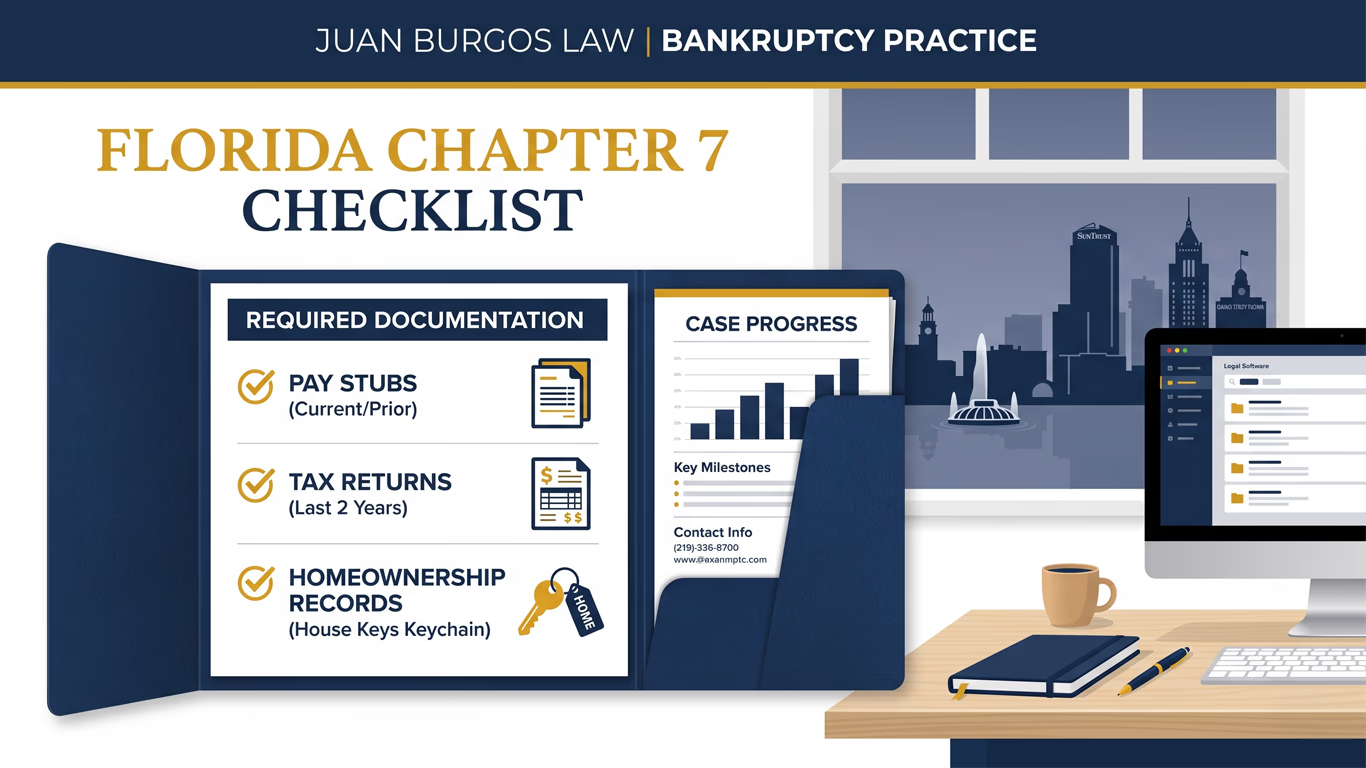
Chapter 7 Bankruptcy Checklist for Florida
Everything You Need to File Successfully
By Attorney Juan C. Burgos, Esq. | Florida Bar No. 84056 | Serving Orange, Osceola, and Seminole Counties
Filing for Chapter 7 stops creditor calls the day we file. But whether your debts actually get wiped out comes down to your paperwork. To satisfy the Middle District of Florida court, you'll need 60 days of pay stubs, two years of tax returns, three months of bank statements, and a completed credit counseling certificate. Get these together correctly and we can move fast.
Most of the stress in this process doesn't come from the paperwork itself — it comes from not knowing what the court actually wants to see. Whether you're walking into the federal courthouse in downtown Orlando or handling everything remotely, the trustee expects precision, not perfection. We'll tell you exactly what to gather.
At Juan Burgos Law, we work with families across Orlando, Kissimmee, and the rest of Central Florida to get this organized the first time. Getting your file right from the start is the single best way to avoid delays and keep your assets protected under Florida law. If you're still weighing whether Chapter 7 is the right chapter for your situation, that's worth sorting out before you start gathering documents.
1. Proof of Income (the Florida Means Test)
To qualify for a Chapter 7 discharge, we have to show the court your household income history. The U.S. Trustee's office uses this to calculate the Florida Bankruptcy Means Test — the income thresholds change periodically, so rather than quote a number here that might already be outdated by the time you read this, use our free means test calculator for the current figures. You'll need to provide:
- Pay stubs: every stub covering the last 60 days before filing. Weekly pay means 8 stubs; bi-weekly means 4.
- Other income: written documentation for Social Security, pension payouts, child support, workers' compensation, or unemployment.
- Self-employed? A clean, year-to-date profit and loss statement covering the past 6 months.
The court looks at six months of gross income to confirm eligibility. A missing pay stub or an unrecorded side gig payment can get a case flagged for review, or worse, pushed toward dismissal on a technicality that had nothing to do with whether you actually qualify.
2. Federal Tax Returns
Your trustee is required to cross-check your historical earnings against what you claim on your bankruptcy schedules.
- The last 2 years of returns: signed federal returns (Form 1040) with W-2s and 1099s.
- Unfiled taxes: if you're behind, those returns need to be filed with the IRS before your case can be finalized.
If you're due a refund around the time you file, that refund is treated separately from the returns themselves — see our guide on protecting a tax refund in Chapter 7 for how the timing works.
3. Asset Evaluation & Property Protection
Florida opted out of the federal bankruptcy exemptions under 11 U.S.C. § 522, so we rely on the Florida Constitution (Art. X, Sec. 4) and Florida Statutes Chapter 222 instead. To protect what you own, we need:
| Property | What We Need | Florida Exemption |
|---|---|---|
| Home (Homestead) | Recent mortgage statement, deed copy, county property appraisal. | 100% of equity protected, if you've owned the home at least 1,215 days (about 40 months). Shorter ownership has a lower federal cap — see our full breakdown of what Chapter 7 protects and what it doesn't. |
| Vehicles | Title, loan payoff statement, current mileage. | Up to $5,000 in equity per vehicle under Fla. Stat. § 222.25(1) ($10,000 if married and filing jointly, since each spouse claims their own exemption). Still financing the car? See how reaffirmation agreements and 722 redemption compare if you want to keep it. |
| Bank Accounts | 3 months of statements for checking, savings, and prepaid accounts. | $1,000 personal property exemption under the Florida Constitution, plus up to $4,000 more under Fla. Stat. § 222.25(4) if you're not claiming homestead — $5,000 combined for most filers who rent. |
| Retirement Accounts | Most recent statements for 401(k), IRA, Keogh, or pension accounts. | Fully protected under federal and state law. |
Exemption figures are current as of publication and subject to periodic adjustment — we'll confirm the exact numbers against your case during your consultation.
4. A Complete List of Your Creditors
A discharge only wipes out debts that are actually listed on your petition. Leave a creditor off, and that debt can survive the case. Track down:
- Statements and collection letters for credit cards and personal lines of credit.
- Outstanding medical bills — these often lag behind on credit reports, so a physical bill matters even if it's not showing up online yet.
- Auto loan balances, repossession deficiency judgments, and payday loan agreements.
- Any legal correspondence from collections attorneys or agencies.
5. Credit Counseling Certificate
Federal law requires a short credit counseling course before your case can be filed.
- Takes about an hour, online or by phone.
- Has to be through a provider approved by the U.S. Trustee for the Middle District of Florida.
- We'll point you to a few affordable, reliable options once you're ready to start.
Missing a Document?
That's normal, and it's part of what we're here for. If records are missing, our office can pull IRS tax transcripts, track down vehicle title information, and access property records directly from Orange and Osceola county databases.
The one thing that matters more than any document: honesty with your attorney. Once we know exactly what you own and who you owe, Florida law gives us real tools to protect it. Hiding an asset — even a small one — is the fastest way to put the whole case at risk. It's also why filing without an attorney is riskier than it looks; see our breakdown of the real risks of filing pro se in Florida.
Frequently Asked Questions
What happens if I forget to list a medical bill or a credit card?
If your case is still open, we can file an amendment to add the creditor for a minor court fee. If the case has already closed and the omission was intentional or negligent, that creditor may keep the right to collect from you.
Do I need to list property outside Florida or outside the country?
Yes. Federal law requires disclosure of all assets worldwide, under penalty of perjury — land, bank accounts, or family business shares held anywhere. Leaving foreign assets off is treated as bankruptcy fraud.
Can the trustee see my bank statements after I file?
Yes, right up through your 341 Meeting of Creditors. They're checking that you didn't move or drain money right before filing.
Bring What You Have. We'll Handle the Rest.
You don't need a perfect file to start — you need a first conversation. Bring what you have and we'll build the rest of the checklist together.
Legal Notice: Juan Burgos Law is a federally designated debt relief agency helping individuals and businesses file for protection under the United States Bankruptcy Code. The information on this page is educational and does not create an attorney-client relationship.

Exelente trabajo muy satisfecha con los resultados de un buen abogado y el trato exelente

El Lic Burgos desde el primer momento en que me comuniqué con él me mostró atención y profesionalidad. Lo recomiendo enteramente por su transparencia y su din de escuchar tu situación, gracias Lic Bur… El Lic Burgos desde el primer momento en que me comuniqué con él me mostró atención y profesionalidad. Lo recomiendo enteramente por su transparencia y su din de escuchar tu situación, gracias Lic Burgos.

El Sr. Burgos fue el único abogado que se reunió conmigo y aceptó mi caso pocos días antes de mi audiencia de bancarrota. Llamé a todos los abogados de Kissimmee y Orlando, e incluso los más prestigio… El Sr. Burgos fue el único abogado que se reunió conmigo y aceptó mi caso pocos días antes de mi audiencia de bancarrota. Llamé a todos los abogados de Kissimmee y Orlando, e incluso los más prestigiosos no me trataron como él. Hablé con varios abogados; algunos rechazaron mi caso porque no hablaban español, y otros lo rechazaron por diferentes razones. Le doy cinco estrellas y lo recomiendo ampliamente por su excelente trabajo y buena comunicación.

Excelente experiencia con mi abogado durante todo el proceso de bancarrota. Desde el principio, nos orientó y explicó cada paso de una manera clara, haciendo que un proceso que puede ser muy estresant… Excelente experiencia con mi abogado durante todo el proceso de bancarrota. Desde el principio, nos orientó y explicó cada paso de una manera clara, haciendo que un proceso que puede ser muy estresante se sintiera mucho más sencillo y manejable. Siempre fue profesional, atento y estuvo disponible para aclarar nuestras dudas. Estamos muy agradecidos por su ayuda, dedicación y por la tranquilidad que nos brindó durante todo el proceso. Definitivamente lo recomendamos a cualquier persona que necesite un abogado de bancarrota confiable y profesional. ¡Muchas gracias por todo! Dios lo bendiga siempre.

Excelente equipo de trabajo.muy profesional, estoy agradecido ,gracias por todo