
Can You Sue for Pain and Suffering from a Car Accident in Florida?
The Guide to Non-Economic Damages for Orlando Drivers
By Attorney Juan C. Burgos, Esq. | Serving Orange, Osceola, Seminole & Polk Counties
TL;DR / Direct Answer: The answer is yes, but only if your injuries meet a specific legal threshold. Florida's "no-fault" insurance system limits when you can sue for non-economic damages like pain and suffering. To sue the at-fault driver, your injuries must qualify as "serious" under Florida Statute §627.737, and you must be 50% or less at fault for the crash. Furthermore, you only have exactly two years from the date of the accident to file your lawsuit.
If you were recently injured on Interstate 4 near downtown Orlando, or T-boned at an intersection in Kissimmee, one question is almost certainly running through your mind: can I sue the other driver for the physical agony and emotional distress they caused? Understanding Florida's complex rules could be the difference between recovering thousands of dollars or walking away with nothing beyond your basic insurance payout.
What Is "Pain and Suffering" Under Florida Law?
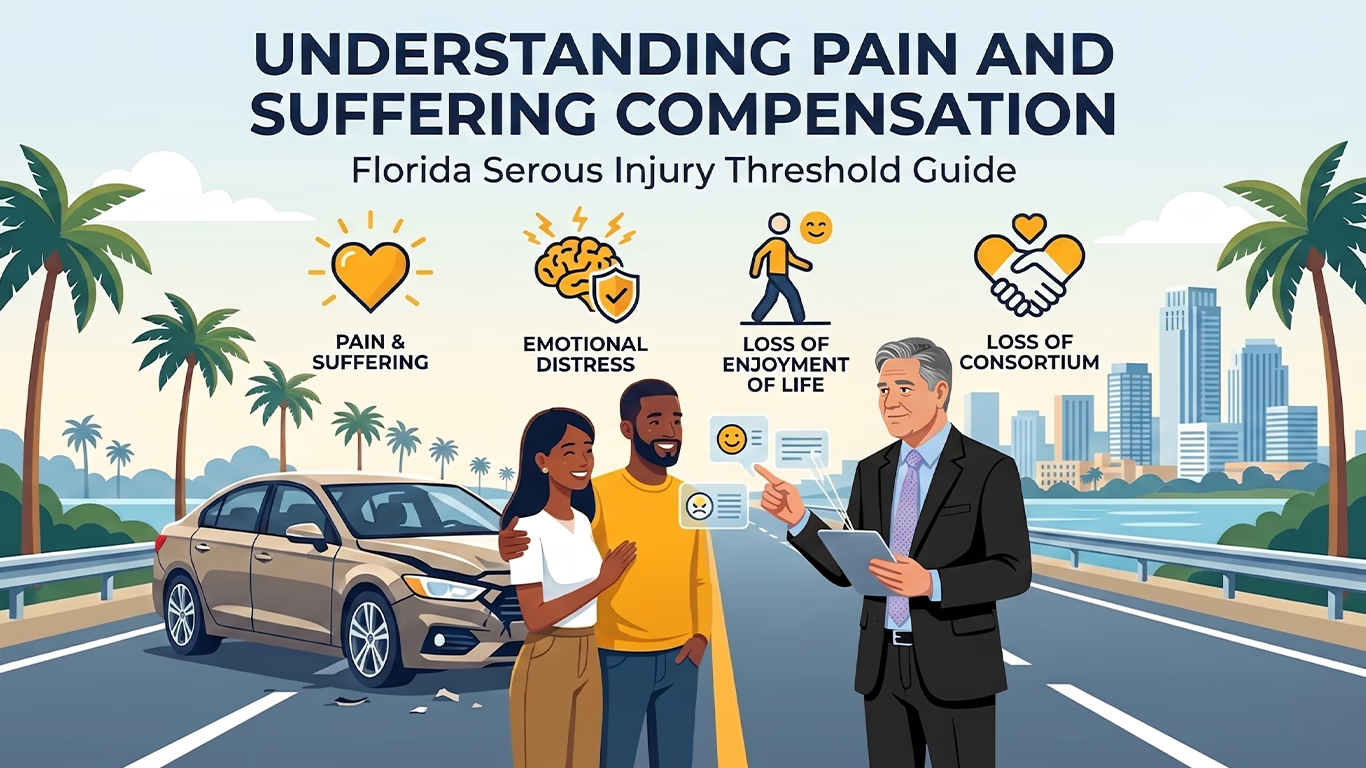
Pain and suffering is a type of non-economic damage — compensation for the physical and emotional toll that an injury has on a person's life. Unlike medical bills or lost wages (which have a clear dollar value), pain and suffering is subjective and harder to quantify. That's exactly why Florida law imposes strict restrictions on when you can claim it in an auto accident case.
| Type of Pain & Suffering | Real-World Examples |
|---|---|
| Physical Pain | Chronic back pain, nerve damage, severe migraines from a traumatic brain injury. |
| Emotional Distress | Severe anxiety, depression, or paralyzing fear of driving after the accident. |
| Mental Anguish / PTSD | Flashbacks, nightmares, inability to return to work due to psychological trauma. |
| Loss of Enjoyment of Life | Inability to play with your children, exercise, or pursue hobbies you previously loved. |
| Loss of Consortium | Harm to your marital relationship, companionship, and intimacy caused by your injuries. |
| Permanent Disfigurement | Visible scars from shattered glass, burn marks, or the loss of a limb. |
Florida's No-Fault System: The First Hurdle
Florida requires every driver to carry Personal Injury Protection (PIP) insurance — a minimum of $10,000. After a car accident, your own PIP pays 80% of your medical bills and 60% of lost wages (up to the $10,000 cap), regardless of who caused the crash.
This is the "no-fault" part. The system was designed to handle minor injuries quickly without clogging the courts. The tradeoff: you cannot automatically sue the at-fault driver for pain and suffering. You must first clear what is known as the serious injury threshold.
⚠️ Legislative Notice: Florida lawmakers periodically discuss eliminating mandatory PIP coverage, but as of publication PIP remains required and the serious injury threshold is still the law. Learn who pays for car damage under Florida's no-fault rules →
The Serious Injury Threshold (FL Statute §627.737)
Under Florida law, you may only sue the at-fault driver for pain, suffering, mental anguish, and inconvenience if your injury meets at least one of the following four criteria:
1. Loss of Bodily Function
Significant and permanent loss of an important bodily function (e.g., permanent loss of limb use, paralysis, permanent loss of vision).
2. Permanent Injury
A permanent injury within a reasonable degree of medical probability, other than scarring or disfigurement (e.g., permanent herniated disc or documented soft tissue damage).
3. Scarring or Disfigurement
Significant and permanent scarring or disfigurement (e.g., severe facial scars from shattered glass, visible burn marks).
4. Death
In the tragic event of a fatality, surviving family members may pursue a wrongful death claim for pain and suffering.
🔑 Critical Legal Point: A physician must certify that your injury is permanent "within a reasonable degree of medical probability." This is why seeing a doctor immediately after your accident — and consistently following through with treatment — is absolutely essential. Gaps in treatment give insurance adjusters ammunition to deny your claim.
Florida's Modified Comparative Negligence Rule
Even if your injuries qualify, a second rule determines how much you can recover. Since House Bill 837 took effect on March 24, 2023, Florida uses a modified comparative negligence system under Florida Statute §768.81(6). If you're 50% or less at fault, you can recover damages, but your award is reduced by your share of fault. If you're 51% or more at fault, you're completely barred from recovering anything.
| Your Fault % | Total Damages Awarded | Amount You Actually Recover | Can You Recover? |
|---|---|---|---|
| 0% | $100,000 | $100,000 | Yes |
| 25% | $100,000 | $75,000 | Yes (reduced) |
| 50% | $100,000 | $50,000 | Yes (reduced) |
| 51% or more | $100,000 | $0 | No — Barred |
Insurance companies routinely try to shift blame onto the injured party to reduce their payout. Having an experienced attorney helps counter these tactics, including pushing back on unreasonable delays — see our guide on how long an insurance company has to settle a claim in Florida →
How Is Pain and Suffering Compensation Calculated?
There is no fixed formula, but Florida courts and insurance adjusters typically use one of two approaches:
| Method | How It Works | Example Calculation |
|---|---|---|
| Multiplier Method | Multiply economic damages (medical bills + lost wages) by a factor of 1.5 to 5x based on the severity of the injury. | $30,000 in bills × 3 = $90,000 in pain & suffering |
| Per Diem Method | Assign a daily dollar value to suffering and multiply by the total number of days affected. | $200/day × 500 days = $100,000 in pain & suffering |
What to Do After a Car Accident in Florida
Call 911 immediately.
Get a police report. It formally documents the scene, the parties involved, and is critical evidence for your case.
Seek medical care within 14 days.
Under Florida Statute §627.736, if you wait longer than 14 days to see a qualifying provider, your insurer can deny your PIP benefits entirely — and Florida law gives no exceptions for delayed symptoms or scheduling difficulties.
Document everything.
Take photos, gather witness contacts, save medical records, and keep a daily "pain journal" to document your emotional and physical struggles.
Don't give a recorded statement.
Never speak to the other driver's insurance adjuster without an attorney. Your recorded statements can and will be used against you to minimize your claim.
Contact a personal injury attorney.
Because attorneys work on a contingency basis (no fee unless you win), there is zero financial risk to getting professional representation immediately.
⏰ Strict 2-Year Deadline
Since House Bill 837 took effect on March 24, 2023, Florida's statute of limitations for these claims dropped from 4 years to just 2 years from the date of the accident, under Florida Statute §95.11(5)(a). Miss this deadline, and you permanently lose your right to sue. Read our full guide to Florida's statute of limitations →
Frequently Asked Questions
Can I sue for pain and suffering if the other driver had no insurance?
Yes. If you carry Uninsured/Underinsured Motorist (UM/UIM) coverage on your own policy, your insurer may cover your pain and suffering damages. Florida does not require UM/UIM coverage, but adding it is strongly recommended.
What if my injury isn't "permanent" yet — can I still file a claim?
Yes, you should contact an attorney right away rather than waiting for a final permanency determination. Your attorney will build your case while your treatment is ongoing to ensure you don't miss the strict 2-year filing deadline.
Does PIP insurance cover pain and suffering?
No. Florida's PIP only covers economic damages (80% of medical bills and 60% of lost wages, up to $10,000). To recover pain and suffering, you must file a lawsuit against the at-fault driver.
How long does a pain and suffering lawsuit take in Florida?
The majority of cases settle before going to trial, usually within 6 to 18 months. Complex cases that go to trial can take 2 to 3 years. See our settlement timeline guide.
What evidence do I need to prove pain and suffering?
Strong evidence includes a physician's written opinion of permanency, consistent medical treatment records, prescription history, a personal pain journal, testimony from family members, and expert witness testimony.
Do I need an attorney to sue for pain and suffering in Florida?
You are not legally required to have one, but without representation, insurance companies will almost certainly offer you far less or deny your claim. Injury attorneys work on a contingency fee, meaning you pay nothing upfront and only pay if they win.
Were You Injured in a Florida Car Accident?
Attorney Juan C. Burgos has been fighting for accident victims in Central Florida for over a decade. Let us handle the insurance adjusters while you focus on healing.
Legal Disclaimer: This article is for general informational purposes only and does not constitute legal advice, nor does it create an attorney-client relationship. Every case is unique. For advice specific to your situation, contact a qualified Florida personal injury attorney.