

Chapter 11 vs. Chapter 7 Bankruptcy
What's the Difference?
By Juan C. Burgos, Esq. | Florida Bar #84056 | Bankruptcy Attorney, Orlando FL
TL;DR: Chapter 7 liquidates — a trustee sells off non-exempt assets, pays creditors, and the case is usually done in 3 to 5 months. Chapter 11 reorganizes — you or your business keep operating while repaying creditors under a court-approved plan over several years. Chapter 13 is Chapter 11's smaller cousin for individuals only, with its own debt limits. And if you're a small business, there's almost always a better fit than traditional Chapter 11: Subchapter V, a faster, cheaper version built specifically for you. The real question isn't which numbered chapter sounds right — it's whether you're trying to close something down or keep it alive.
If you're comparing "Chapter 11" and "Chapter 7," you probably arrived here from one of two directions. Maybe you're a business owner trying to figure out whether your company can survive its debt. Maybe you're an individual whose debts are too large for the more common consumer bankruptcy chapters. Either way, these two numbers represent opposite strategies — one shuts things down, the other keeps them running — and picking the wrong one wastes months and real money on a case that never should have been filed that way.
What Chapter 7 Actually Does
Chapter 7 is liquidation. A trustee is appointed to your case, takes control of any non-exempt assets, sells them, and distributes the proceeds to creditors in the order the Bankruptcy Code requires. For most individual filers in Florida, this sounds scarier than it is — Florida's exemptions are broad enough that the large majority of consumer Chapter 7 cases are "no-asset" cases, meaning nothing is actually sold. The whole process typically wraps up in 3 to 5 months, and your eligible debts are discharged.
For a business, Chapter 7 is more final: operations stop, assets are sold, and — if the business is a corporation or LLC — the entity itself doesn't receive a discharge, because only individuals do. It simply ceases to exist. Sole proprietors are the exception: since there's no legal separation between you and the business, your personal Chapter 7 discharges business debt right along with your personal debt.
What Chapter 11 Actually Does
Chapter 11 is reorganization. Instead of liquidating, you — or your business — keep operating as a "debtor in possession" while proposing a court-approved plan to repay creditors over time, typically three to five years. No trustee takes over your operations in most cases. Creditors vote on the plan, and the court can confirm it even over some creditor objections if the legal standards are met.
Chapter 11 is open to businesses of any size and to individuals whose debts are too large to qualify for Chapter 13 — commonly people with multiple investment properties or large personal guarantees. It's also the slower, more expensive path here: without a streamlined process, a traditional Chapter 11 case can take a year or more just to get a plan confirmed, and six-figure administrative costs are typical.
Most small businesses don't actually belong in traditional Chapter 11
If your business owes $3,424,000 or less, Subchapter V is a streamlined version of Chapter 11 built specifically for small businesses — no creditors' committee, no quarterly U.S. Trustee fees, and a strict 90-day deadline that keeps the case moving instead of dragging on for years.
Chapter 7 vs. Chapter 11: The Core Difference
Chapter 7 — Liquidation
- Ends operations or sells non-exempt assets
- Usually complete in 3–5 months
- No repayment plan — no ongoing court supervision after discharge
- Right fit when the underlying business or budget isn't viable going forward
Chapter 11 — Reorganization
- You keep operating as "debtor in possession"
- Months to a year-plus to confirm a plan, then 3–5 years to perform it
- Creditors repaid over time from ongoing income or asset sales
- Right fit when the income is real but legacy debt is strangling it
Where Chapter 13 Fits In
Chapter 13 is Chapter 11's smaller, individual-only cousin. It's the standard tool for someone who's behind on a mortgage and wants to catch up over time instead of losing the house to foreclosure, or whose income is too high to qualify for Chapter 7. Businesses can't file Chapter 13 at all — only individuals can.
Unlike Chapter 11 or Subchapter V, Chapter 13 has hard debt limits. As of April 1, 2025 (in effect through March 31, 2028), you can't have more than $1,580,125 in secured debt or $526,700 in unsecured debt — tracked separately, not combined — to qualify under 11 U.S.C. §109(e). If your personal debt is under those limits, Chapter 13 is almost always simpler and cheaper than an individual Chapter 11 filing. If you're over them, Chapter 11 becomes your only reorganization option.
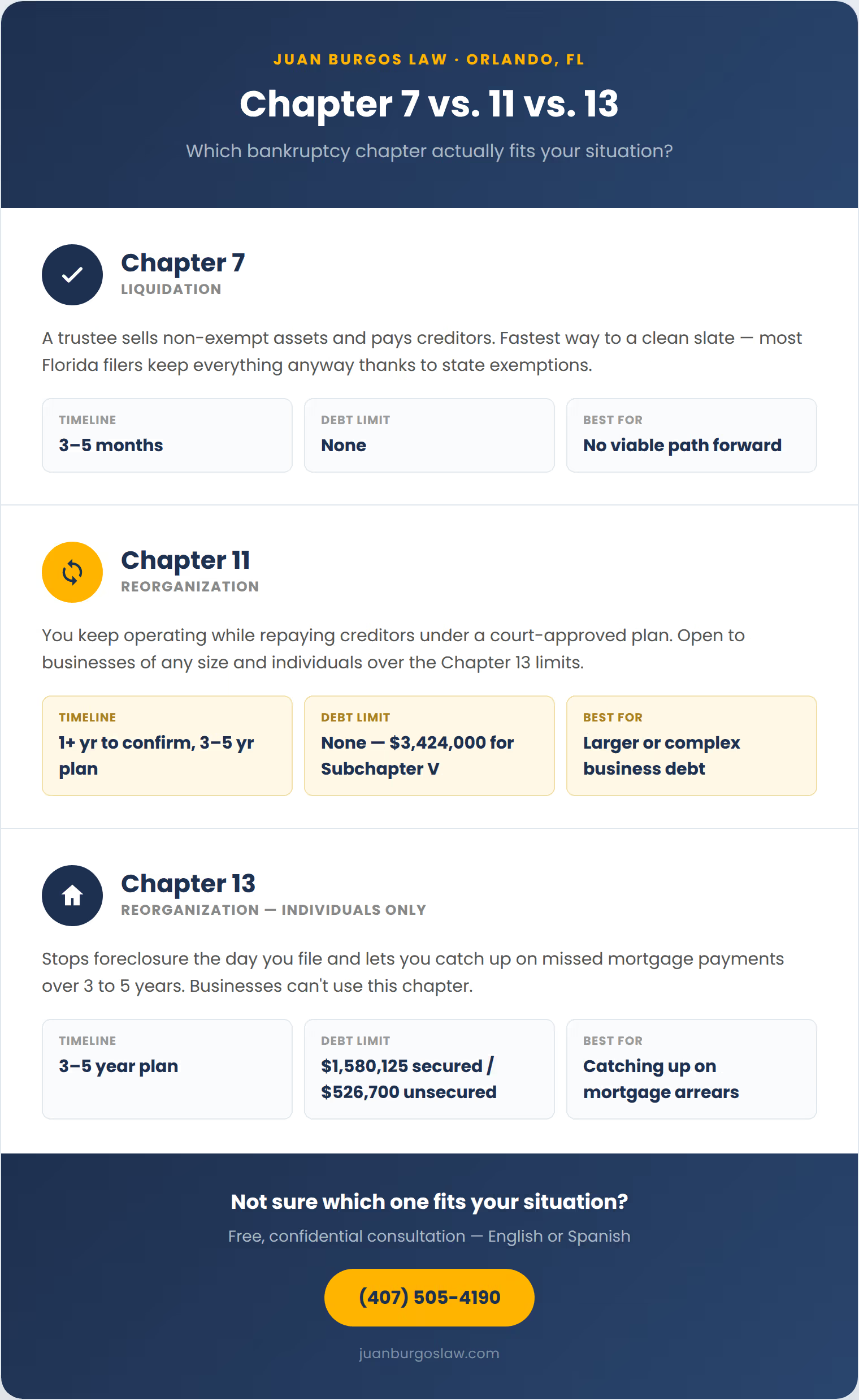
Chapter 7 vs. Chapter 11 vs. Chapter 13: At a Glance
| Feature | Chapter 7 | Chapter 11 | Chapter 13 |
|---|---|---|---|
| Who can file | Individuals & businesses | Individuals & businesses, any size | Individuals only |
| What happens | Liquidate & close | Reorganize & keep operating | Reorganize & keep property |
| Debt limit | None | None ($3,424,000 for Subchapter V) | $1,580,125 secured / $526,700 unsecured |
| Typical timeline | 3–5 months | Months to 1+ year to confirm, then 3–5 year plan | 3–5 year plan |
| Common use case | No viable path forward | Larger or complex business debt | Catch up on mortgage arrears |
Which One Actually Applies to You?
If You're a Business
- Ready to close and the model isn't working → Chapter 7
- Viable, but debt is $3,424,000 or less → Subchapter V, not traditional Chapter 11
- Viable, but debt is over that limit or the structure is complex → Chapter 11
- Personally guaranteed a business loan? A business filing alone won't protect you — that needs its own conversation
If You're an Individual
- Income under the Florida median or passes the means test → Chapter 7
- Behind on a mortgage and want to keep the house → Chapter 13
- Debt is above Chapter 13's limits ($1,580,125 secured / $526,700 unsecured) → Individual Chapter 11
- Not sure where you land on income? Run the numbers first
Specifically weighing Chapter 7 vs. Subchapter V for your business?
This page covers all three chapters at a high level. For the specific close-the-business-or-save-it decision Florida business owners face, read our dedicated comparison: Chapter 7 vs. Subchapter V. If you're an individual instead, our Florida Means Test Calculator gives you a fast, free read on where you stand.
Frequently Asked Questions
What's the main difference between Chapter 7 and Chapter 11 bankruptcy?+
Chapter 7 liquidates — a trustee sells non-exempt assets and the case closes in 3 to 5 months. Chapter 11 reorganizes — you or your business keep operating and repay creditors over time under a court-approved plan.
Can an individual file Chapter 11, or is it just for businesses?+
Individuals can file Chapter 11. It's most common for people whose debts exceed Chapter 13's limits — often from multiple investment properties or large personal guarantees on business debt.
What's the difference between Chapter 11 and Chapter 13?+
Chapter 13 is only for individuals and has hard debt limits ($1,580,125 secured / $526,700 unsecured as of April 1, 2025). Chapter 11 is open to individuals and businesses of any size, with no debt cap, but is slower and more expensive to administer.
Is there a debt limit for Chapter 11?+
No, traditional Chapter 11 has no debt limit. Subchapter V — the faster, cheaper version of Chapter 11 for small businesses — caps out at $3,424,000 in qualifying debt.
Should a small business file Chapter 11 or Subchapter V?+
Almost always Subchapter V, if the business owes $3,424,000 or less. It follows the same keep-operating-and-repay approach as traditional Chapter 11 but without the creditors' committee, quarterly trustee fees, or open-ended timeline.
How long does Chapter 11 take compared to Chapter 7?+
Chapter 7 is typically 3 to 5 months start to finish. Chapter 11 can take months to over a year just to get a plan confirmed, followed by 3 to 5 years of plan performance — though Subchapter V's 90-day plan deadline moves small business cases much faster.
Not Sure Which Chapter Fits Your Situation?
Get a free, confidential consultation — English or Spanish.
This article is for general educational purposes and does not constitute legal advice or create an attorney-client relationship. Attorney Juan C. Burgos is a federally designated debt relief agency helping families and businesses file for relief under the United States Bankruptcy Code.