
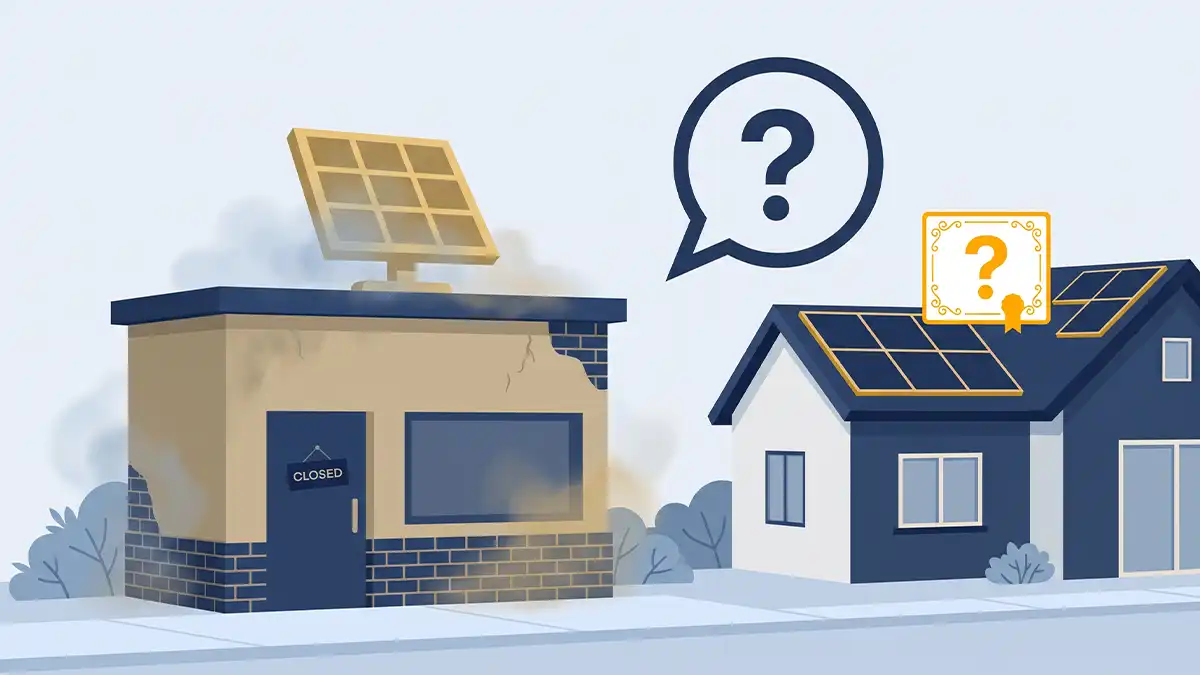
Solar Installer Went Bankrupt? Titan Solar, SunPower, Enviro Solar Customers — What to Do
By Juan C. Burgos, Esq. | Florida Bar #84056 | Bankruptcy Attorney, Orlando FL
Direct answer: If your solar installer went out of business, you still owe the lender who financed the purchase — not the installer. Separately, the FTC Holder Rule and Florida's Chapter 520 disclosure requirements may give you claims against that financing, depending on how the deal was structured. Start by identifying your actual lender, not the company that installed the panels.
Who You Actually Owe
Several solar installers that operated in Florida in recent years have since closed, filed for their own bankruptcy protection, or stopped doing business under their original name. When that happens, the loan doesn't disappear with the installer. Check your monthly statements or your original financing paperwork for the actual lender's name — that's who you owe, and that's whose lien is on your property, regardless of whether the installer still exists.
The FTC Holder Rule, Explained Plainly
Under 16 C.F.R. §433 (the "Holder Rule"), when a seller arranges or refers the financing for what it sells, the entity that ends up holding that loan can, in some circumstances, be subject to the same claims and defenses you could have raised against the seller directly. In plain terms: if your installer misrepresented something about the system, or the installation itself was defective, the Holder Rule may let you raise that against the lender too — not just against the now-defunct installer. Whether it applies depends on exactly how your financing was arranged, which needs a document review.
Florida Chapter 520 Disclosure Defects
Florida's retail installment sales statute (Chapter 520) requires specific disclosures for certain home-improvement financing contracts. If your solar financing agreement didn't meet those disclosure requirements, that can be a basis to challenge the contract entirely — outside of bankruptcy. This is worth checking before assuming bankruptcy is your only option.
When bankruptcy still matters
If neither the Holder Rule nor a Chapter 520 defect resolves things, or if you have other debt to address too, §722 redemption (Chapter 7) or a §506(a) cramdown (Chapter 13) can still address the lien on the panels directly — independent of whether the installer still exists.
Frequently Asked Questions
My solar installer went out of business. Do I still have to pay?+
Generally yes, but to the lender who financed the system, not the installer. Check your statements for the lender's name if you're unsure.
What is the FTC Holder Rule and does it apply to me?+
It's a federal rule (16 C.F.R. §433) that can let you raise claims against the loan holder that you could have raised against the seller, when the seller arranged the financing. Whether it applies to your loan needs a document review.
Is my warranty still valid if the installer is gone?+
It depends on whether the warranty was backed by the installer, the panel manufacturer, or a separate third party, and whether that entity is still operating. Check your original paperwork for who actually issued the warranty.
Should I stop making loan payments since the installer is gone?+
Not without legal advice first. Stopping payments can trigger default and collection action even if you may ultimately have valid claims against the loan. Talk to an attorney before withholding payment.
Still have a lien on the property?
See our full Solar Panel Lien Removal guide for how redemption and cramdown work if bankruptcy ends up being the right path.
Read the Full Guide →Legal Notice: This page is for general informational purposes only and is not legal advice. Reading it does not create an attorney-client relationship. Laws, statutes, dollar amounts, and procedures can change after this page was published — do not assume anything here is current or factual. Contact an attorney to confirm how the law applies to your specific situation before relying on this information. Juan Burgos Law is a law firm duly licensed to practice law throughout the State of Florida. Juan Burgos Law is a debt relief agency. We help people file for bankruptcy relief under the U.S. Bankruptcy Code.
Installer Gone? We'll Sort Out Who You Actually Owe
Bring your contract and statements — we'll identify your lender and your options.
Call (407) 505-4190 →